PWM Compressor updates

I did some experiments and found the PFET switch has a limitation of about 1.6 volts total swing it can tolerate without clipping (using a 470 ohm load) you can get about 2 volts max with a higher  load of 4.7K or so. This is perfectly fine for most guitar applications.For more headroom you can use a an analog switch such as the TS12A4515. A number of manufacturers make this device. It is a normally closed analog switch. Of course others will work also. Using this as a switch basically makes the supply rails the headroom limit. I am going to play with the circuit some more and come up with a board layout and will post my final design in a few weeks.


The PWM SQUEASAL

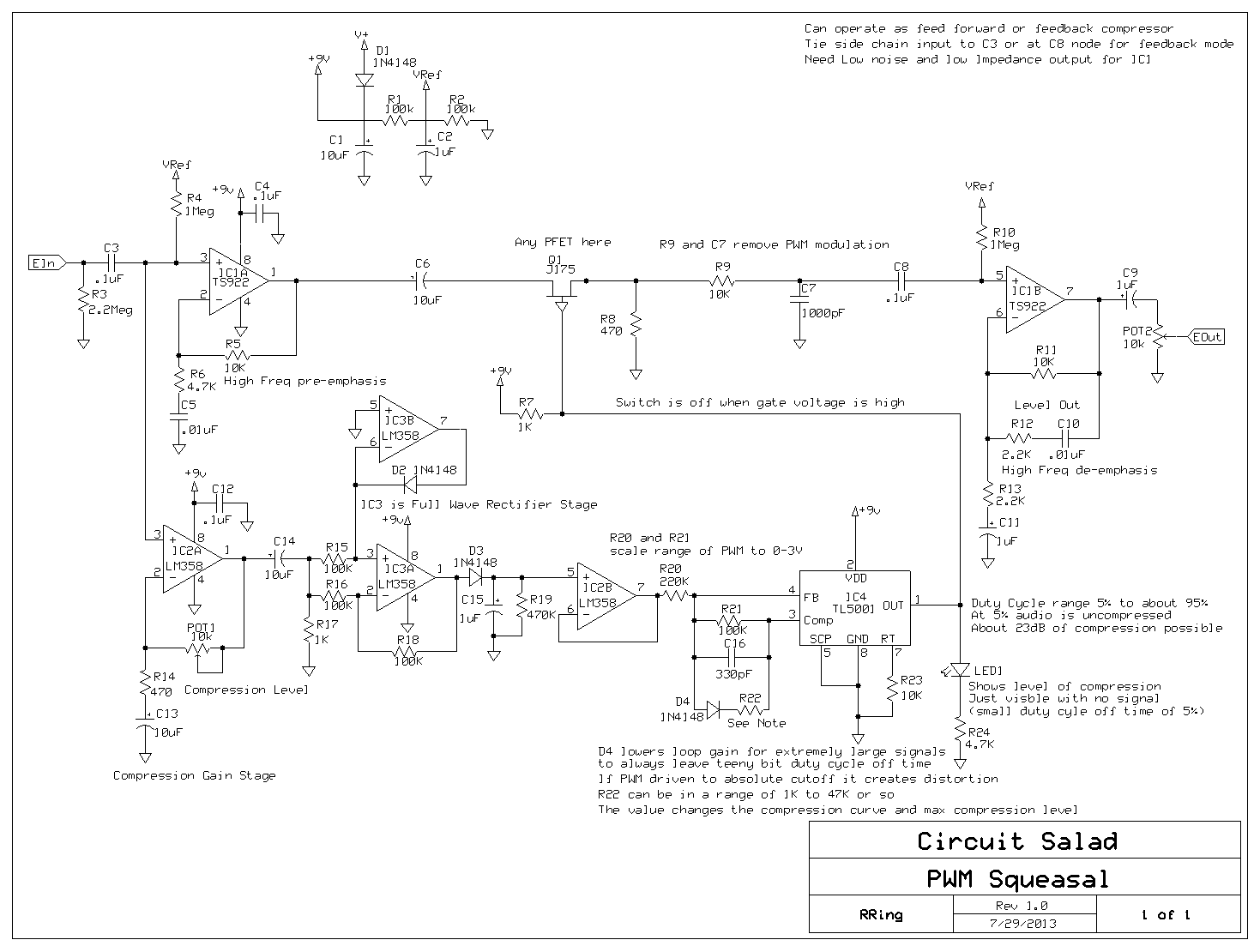
I spent the last week working on a simple feed forward compressor using the TL5001 pulse width modulation IC to create variable pulse with switching circuit where signal output approximately linearly proportional to duty cycle of a 500KHz switching signal. The benefits of this include: very low noise, low distortion and lots of attack/decay flexibilty. I had some problems with noise early on but now the design shows great promise. It can work either in feed forward mode or feedback mode and has tons of possibilities for modification and refinement. Hopefully someone else can play with it and come up with some improvements. It is super quiet because no gain is changed of any amp stage – just the signal level itself. Other switching elements are possible, but the PFET works very well.

Schematic:

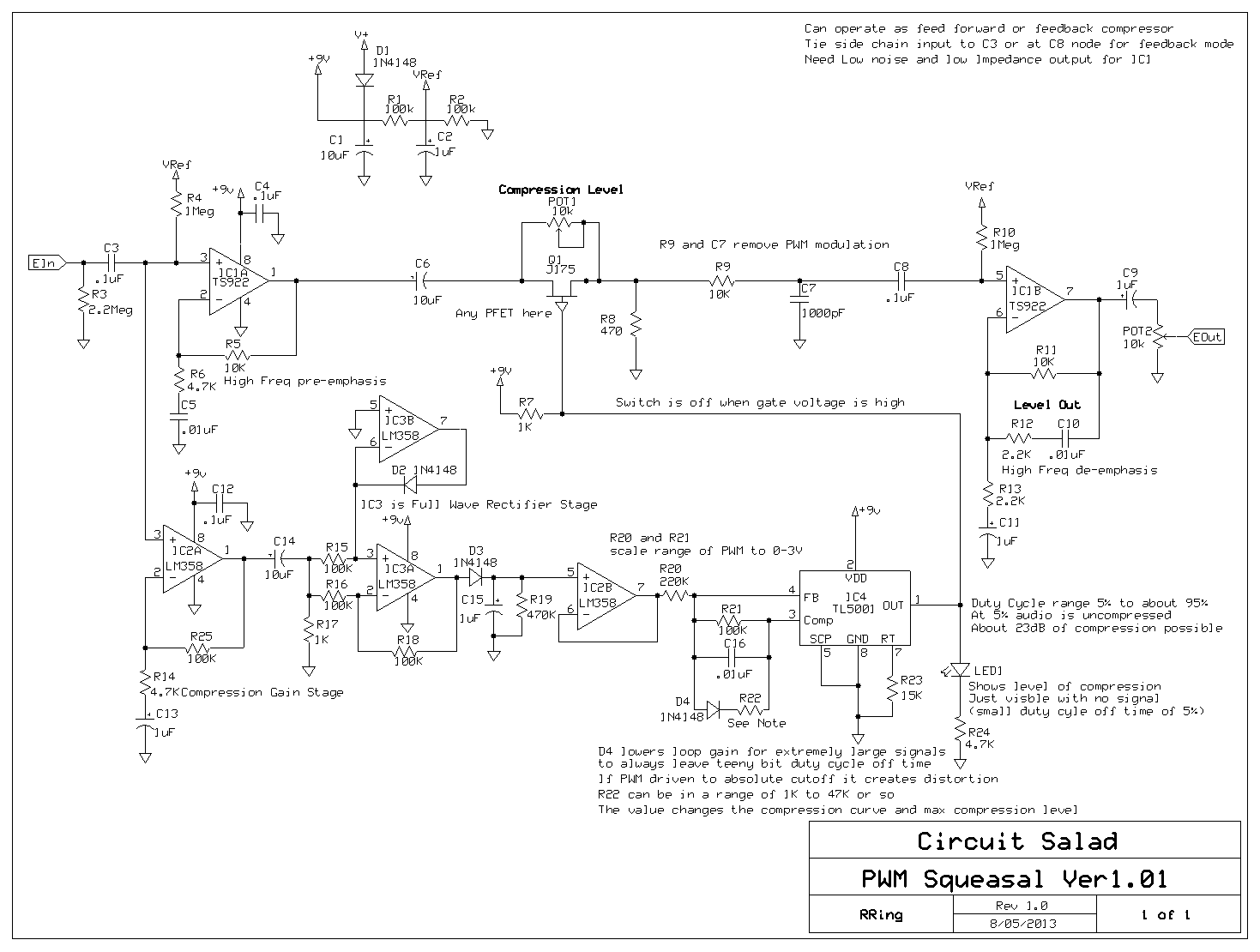
Here is an alternate version which I may like a little better where the compression ratio is controlled by simply bypassing the switch:

Video Demo:

PCB layout coming soon:

Ring Modulator PCB Info and Misc Notes

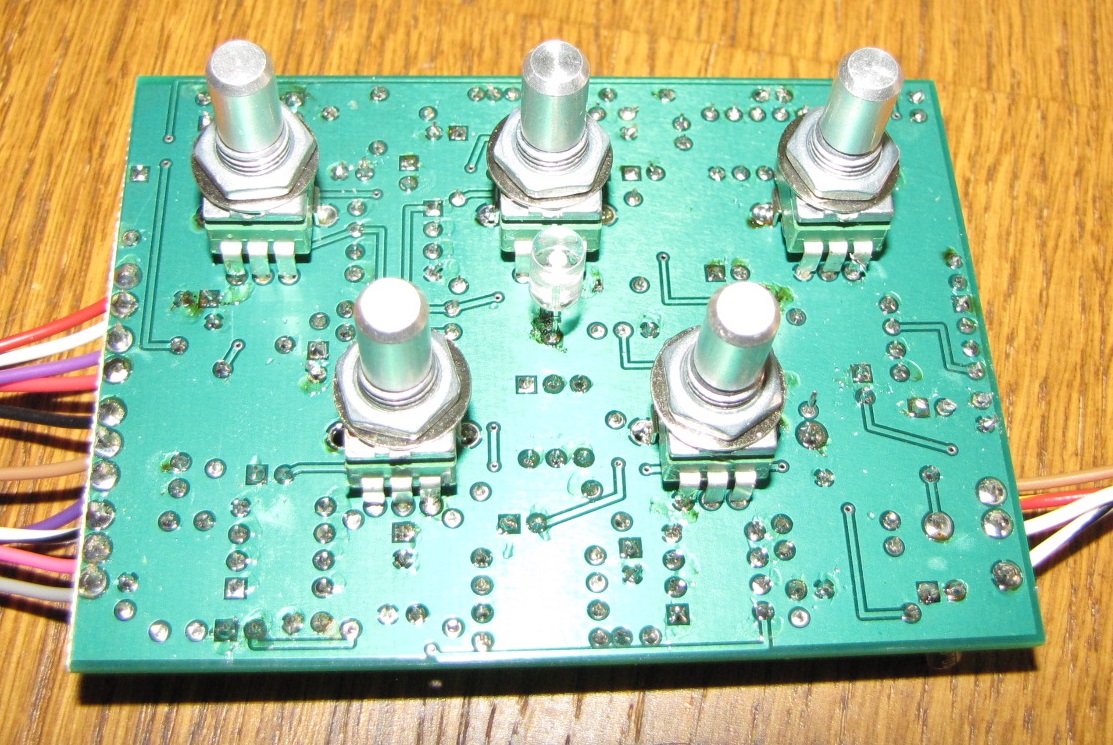
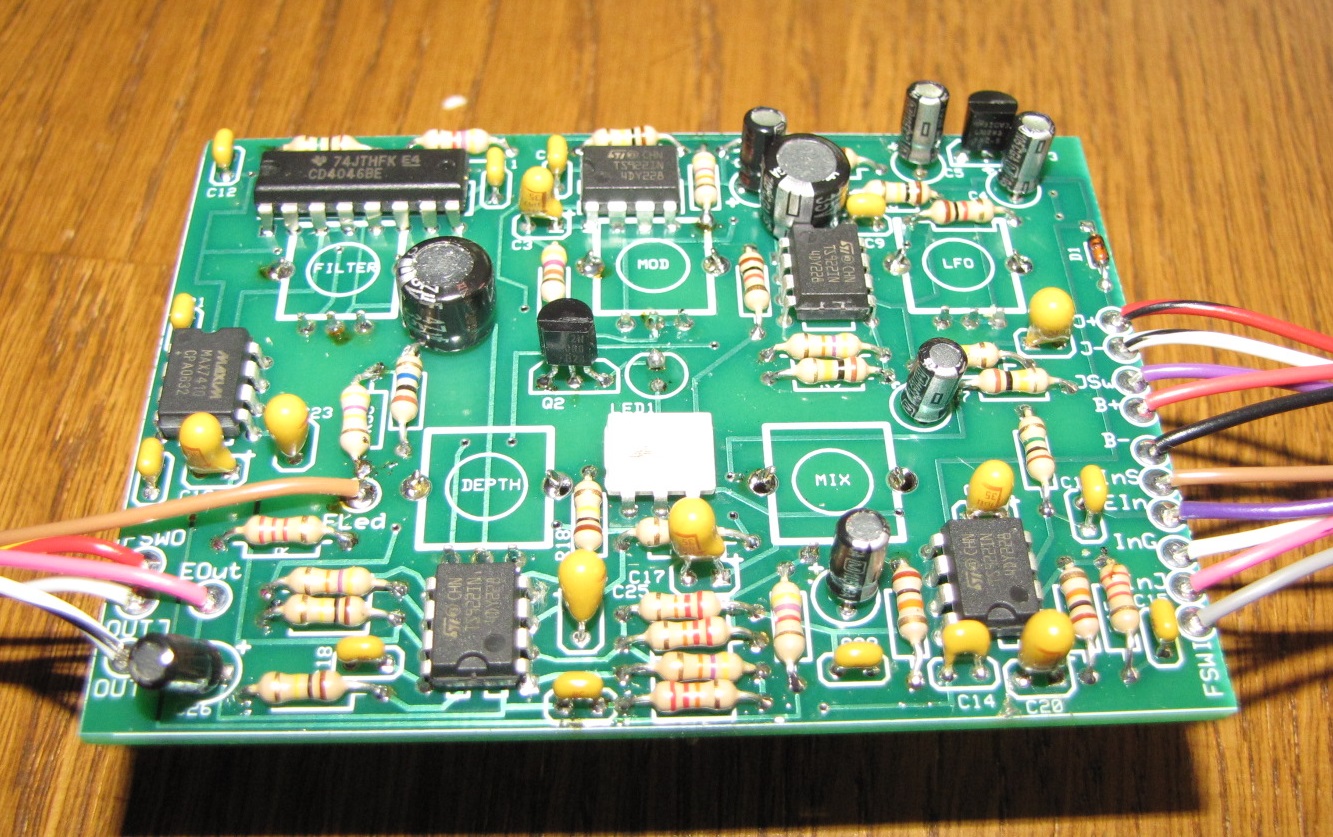
View of the Back Side Where  9mm Alpha POTS Are Mounted

IMG_5409

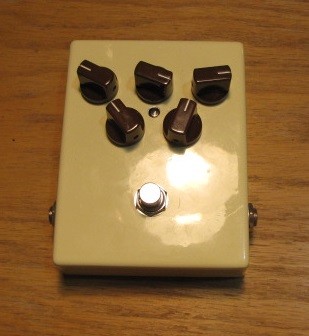
Component Side View

IMG_5406

The board layout is tight but very doable. It is designed to fit easily in a 1590BB enclosure and also will fit on the expresspcb’s cheapest  prototype service fixed size 2.5 x 3.8 board  (3 boards for $59.00 delivered ).

Here is the link to the expresspcb layout:  https://www.adrive.com/public/tQPgjW/Ring%20Mod.zip

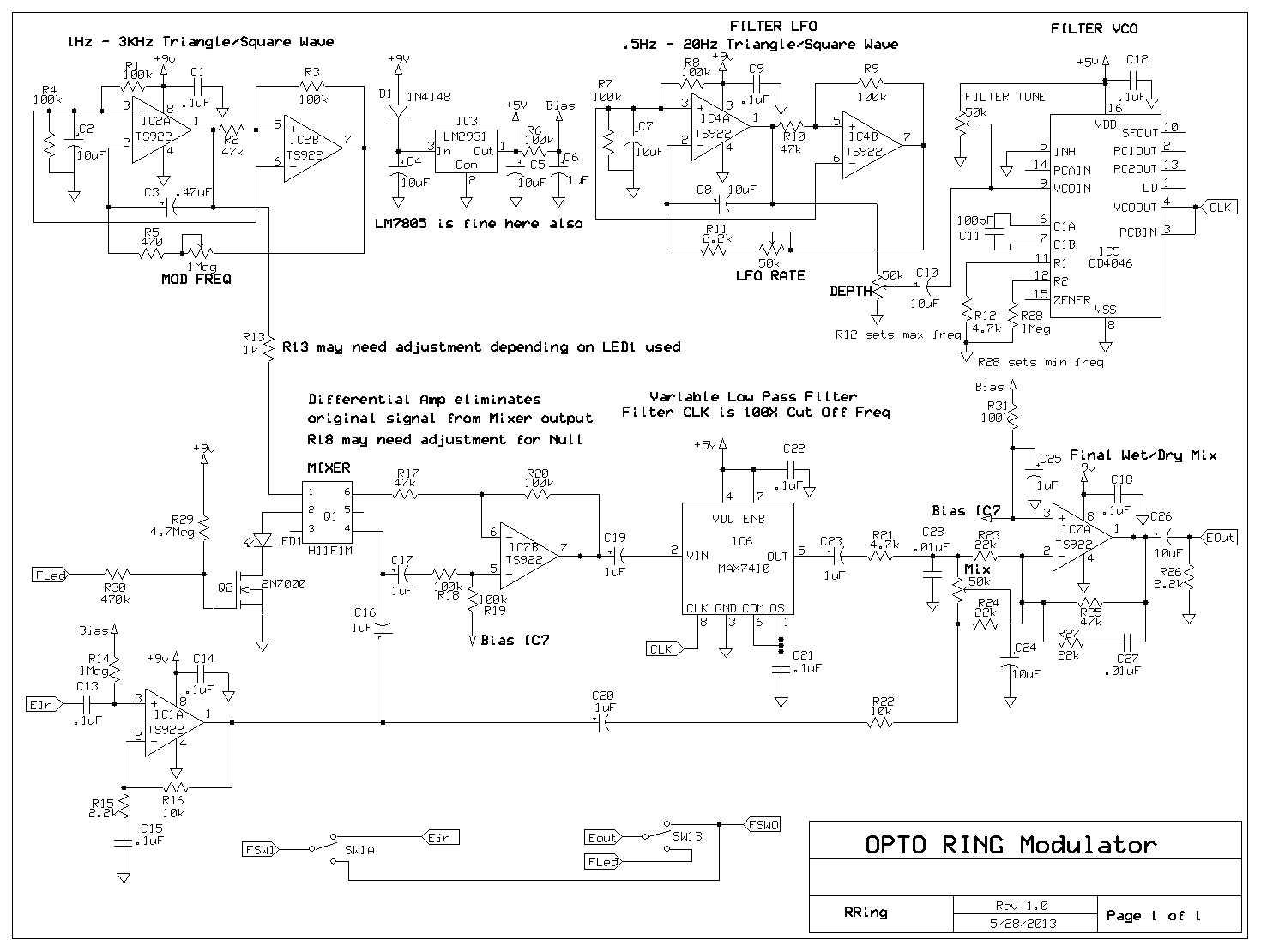
The Associated Schematic is here:

Couple of notes:  

The Blue LED I use has  a very high turn on voltage of more than 3V. If you use another type,  R13 will definitely need to  be increased perhaps to 2.2k or greater. The part I used is from Digikey and the part number is  OVLLB8C7.

The design uses 9mm alpha pots mounted on the back. Others can be used just connect wires to the pin connection holes on the board.

Ring Modulator with Low pass Filter and Filter Modulation

I have done some work to improve the basic Ring Modulator schematic of the previous post  to make it much cooler. I have added a 5 pole variable low pass filter with voltage controlled low frequency modulation. You can easily separate the sum and difference products at the output. With this you can get some incredible sounding low frequency drones and other effects. It also produces some very nice analog synth sounds. I am working on a layout of the prototype and may end up optimizing some values here and there. The breadboard version works well but there is a little modulation leakage at the high end. Hopefully a well grounded layout will solve this.

The design uses a TS922 op amp because it has great specs and is cheap  but others will work. I do not recommend the TL072 because the headroom is so bad at 9V.

The Demo Video shows me fiddling with the controls on the breadboard prototype and just noodling some random lines. It conveys just a few of the different sounds you can generate.

Schematic:

Demo Video:

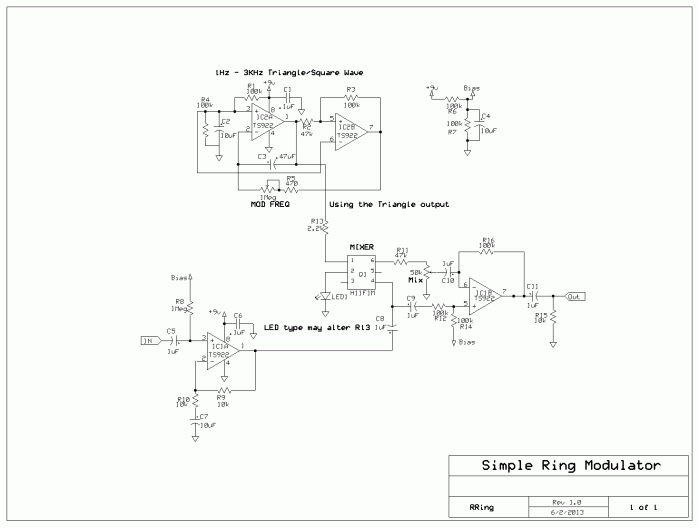
Super Simple Ring Modulator Using H11M1 Optocoupler As Mixer

The Link below is for the circuit diagram for a good performing Ring Modulator, but instead of using a diode “ring” it uses a simple optocoupler as an unbalanced mixer. This works for two reasons, one; the modulation drives the optocoupler LED and is electrically isolated, eliminating modulation leakage through the mixer. Two, a simple differential amplifier is used to pass the original signal from 100%, all the way to nulling it out entirely, by means of the mix POT. The frequency mixing occurs because of the highly nonlinear nature of the switching action which generates the sum and difference components.

This simple design rivals  the performance of a well designed balanced mixer. The optocoupler is driven by a triangle wave. The  drive level  is important. By setting the drive correctly, the triangle wave peaks are rounded off  gently by the LED turning on inside the H11M1. Another LED is put in series with optocoupler to give frequency indication and the output of the oscillator is tailored to do this. It will not work correctly without the voltage drop of the LED. I just grabbed a junk box one. Depending on your LED you may need a different value for R13.  Alternatively, you can shift the level down by tweaking the oscillator values some, if you  do not want the LED.

The impedance loading the output of the H11M1 is important. If it is to high or to low, the signal will be distorted. The key is to minimize the voltage across the optofet as it is transitioning from off to on. The point being that the differential amplifier resistor values are not arbitrary and need to be adhered to.

Finally, it  is important isolate the oscillator from the the rest of the circuit or the modulation tone can leak through to the output from stray leakage. You can tell this is the problem when you disconnect the drive to the mixer but you still hear the modulation tone.

This is just a basic circuit, I am working on a really enhanced version that will do far more – so I will keep updating

Schematic:
Make your Transistor act like a triode

I have thought for some time that by adding shunt/shunt  feedback to a bipolar transistor or mosfet (a JFET also but only AC coupled), that it would emulate a Triode tube with respect to the output I/V curve. So I decided to simulate it and check.  These devices, when biased for normal operation, have a output response that becomes independent of the supply used. This is the same for a Pentode tube like a 6L6, EL84, etc, where the screen grid has a constant bias allowing the plate voltage to vary significantly without changing the current flow through the tube.  By adding shunt/shunt feedback, which in this case is a feedback resistor from the collector to base of a Darlington device, the output I/V behavior becomes constrained by the biasing of the base and therefore affected by the changing voltage seen at the collector.

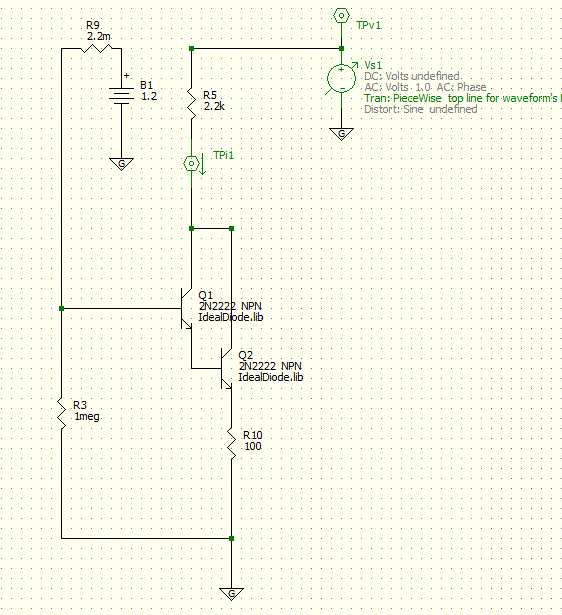
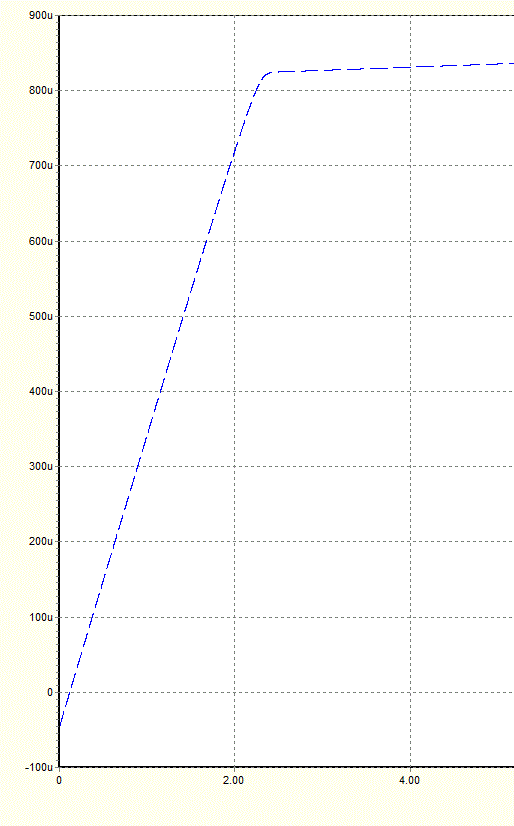
Shown below is a simple amplifier circuit, simulated in SPICE, using a Darlington  but without the feedback. You can see from the I/V(current  is the Y axis and voltage the X axis) curve that at a couple volts or so, the device is in the active region and as the voltage increases the current stay mostly the same.  The current through the device becomes independent of the voltage across it – like a Pentode or saturated mosfet.

Trans cirIV_trans

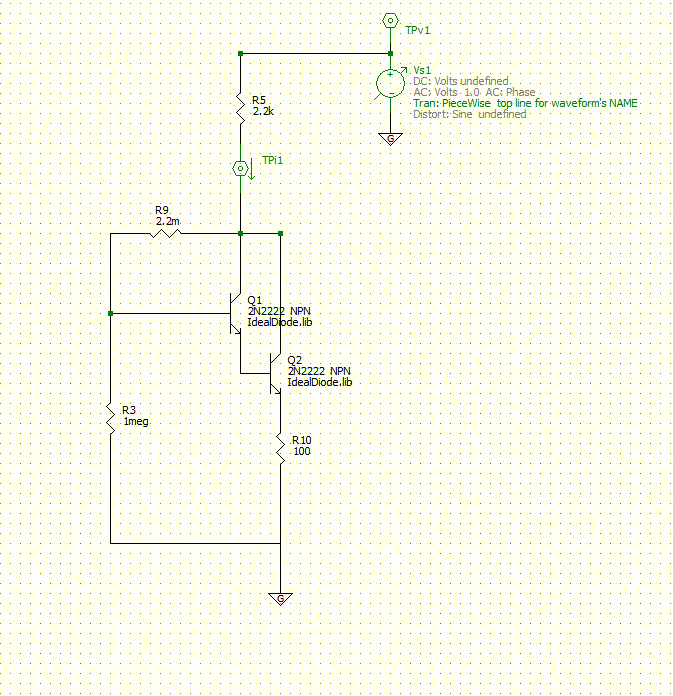
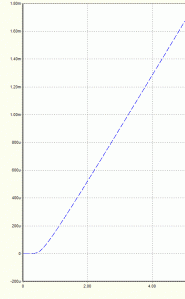
Now lets add the shunt/shunt feedback as shown below. You can see with the new circuit, that as the device is turning on, there is a small but highly non-linear region. This is because the supply voltage is below the point of actually biasing the device all the way on. As the supply voltage is increased, the device is biased on but the current through the device now is dependent on the supply voltage because as the supply voltage changes so does the base bias and therefore the current flow through the collector circuit. The alters the I/V behavior the device to act like a Triode where the output I/V behavior is much like a simple linear resistor.

triodedarlington         IV_TRiode

I used the Darlington in the manner in my Battery Amp with excellent results.

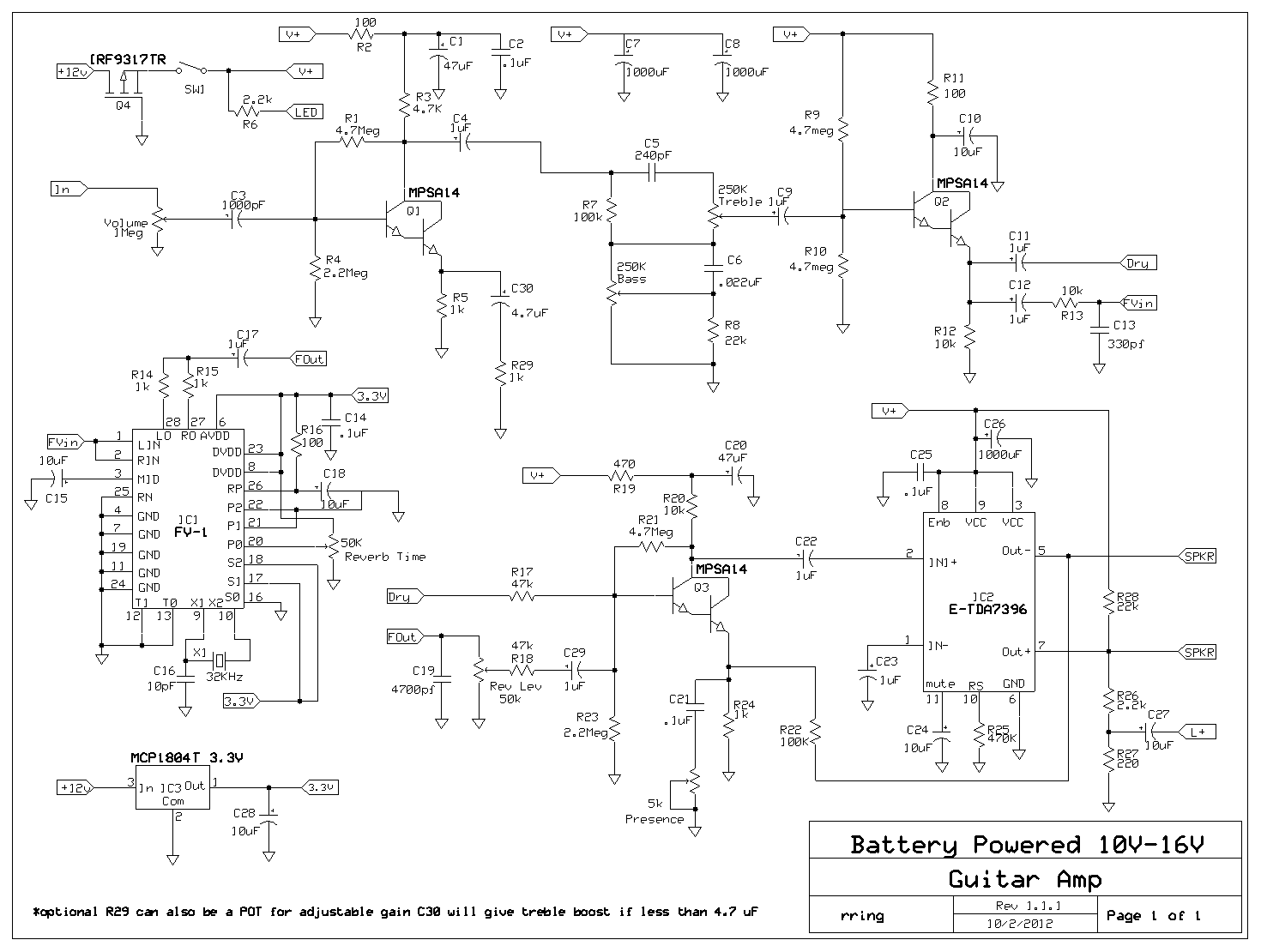
Variation of Battrey Amp Schematic with Demos and new layout

I modified the circuit of the battery amp to put the volume control before the first stage like the original FET version of the amp (one of the first posts). It really doesn’t sound that different  – It just allows you to have really high output input sources without overdriving the first stage. It is very easy to modify the original board layout to do this.  On the final stage, I also modify some values because of the altered gain distribution.

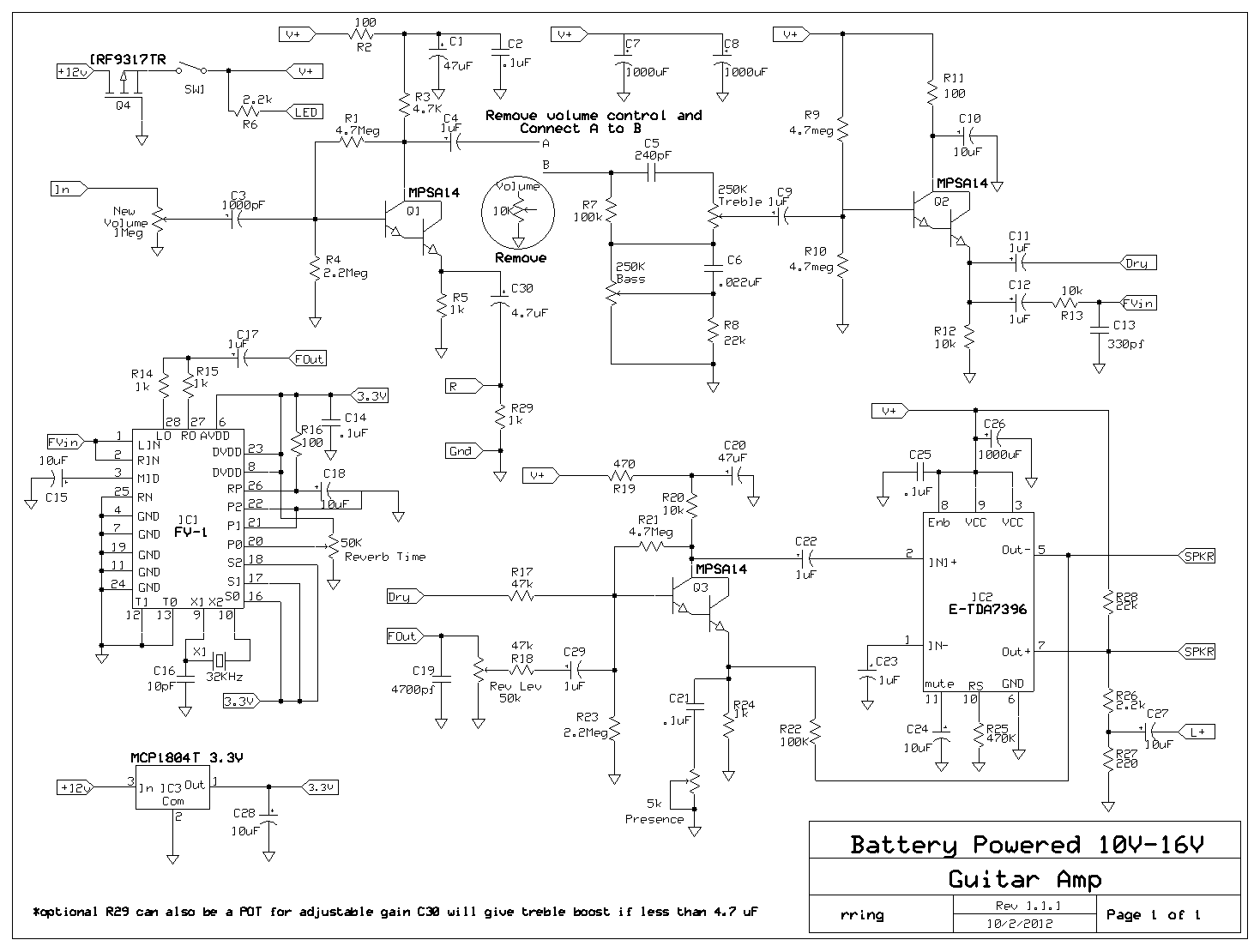
Here Is The New Schematic showing what needs to be modified:

https://circuitsalad.com/wp-content/uploads/2013/05/portaamp3b.gif

if you compare to the last version – its not that different.

Here is  jazz demo with some compression from my simple opto-compressor and the amp set with a little mid size  room reverb and mid way settings on the Bass, Treble and Presence. The guitar is a cheap beater electric that cost me $150.00. It is always fun to see if you can good sound out of crappy guitars!

https://circuitsalad.com/wp-content/uploads/2013/05/night-and-day-with-comp.mp3

Note: In the this schematic and layout below,  I changed one of the select lines for the FV-1 to use a different reverb algorithm – not a big deal – I just like it  a little more than the original.

Here is a new board layout that requires no modification and reflects the new schematic exactly:

http://www.fileswap.com/dl/v1TrMfdse/

Here is the schematic as shown above but without any references to modification:

https://circuitsalad.com/wp-content/uploads/2013/05/portaamp3bfinal.gif

New Amp Demos

Here is the first demo of my new battery powered amp  described in the last few posts – more demos to follow this week.

The tracks will all be recorded on a Tascam handheld recorder with the built in  MICs @ 1 foot from the speaker.

Demo 1 : No reverb – jazz tone on floating pickup arch top – simple chord melody

https://circuitsalad.com/wp-content/uploads/2013/04/walking-my-baby-home.mp3

Demo 2: Old beater electric guitar, small room reverb, lot of treble, bridge pickup and noodling around on B minor. As a side note: I am also using  some compression with the newest opto-compressor described in a previous  post.

https://circuitsalad.com/wp-content/uploads/2013/04/bathroom-tile-blues.mp3